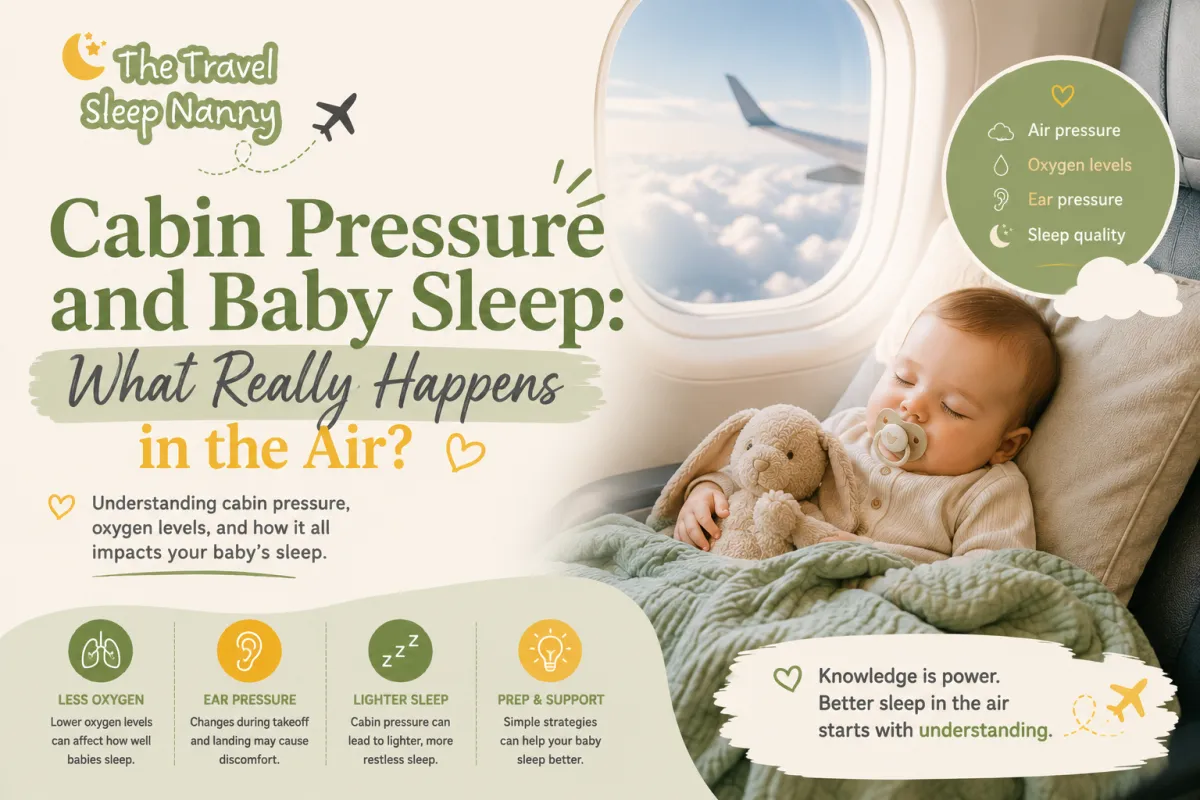
Cabin Pressure and Baby Sleep: What Really Happens in the Air?
Have you ever boarded a flight with your baby secretly hoping that the gentle hum of the aircraft will send
them straight to sleep?
Sometimes it does.
Other times, the baby who was happily drifting off at the gate suddenly becomes unsettled during take-off
— or wakes crying just as the plane begins its descent.
One possible reason? Changes in cabin pressure.
When we fly, changes in altitude affect the pressure inside the aircraft. Adults usually manage this
without thinking too much about it — we swallow, yawn or chew something and our ears “pop”. Babies, of
course, can’t intentionally do this.
So what does cabin pressure actually mean for your baby’s sleep, and is there anything you can do to
make flying more comfortable?
First: Does Cabin Pressure Make Babies Sleepy?
Not directly.
There is a lovely idea that the change in cabin pressure somehow makes babies fall asleep, but there
isn’t good evidence that cabin pressure itself acts like a natural sleep aid.
What can encourage sleep on an aeroplane is the environment. The constant background noise of the
engines can resemble white noise. The vibration and movement may also feel soothing, particularly for
babies who enjoy motion.
Then add the fact that getting through an airport is a very stimulating experience — and many babies are
simply tired by the time the aircraft takes off.
So yes, your baby might fall asleep beautifully after take-off. But it’s probably not the cabin pressure
working its magic.
Where Cabin Pressure Can Affect Sleep: Their Ears
The more important issue is the change in air pressure during take-off and landing.
Behind the eardrum is the middle ear. A small passage called the Eustachian tube helps equalise
pressure between the middle ear and the surrounding environment.
When an aircraft climbs or descends, the surrounding pressure changes. Adults instinctively swallow or
yawn to help equalise that pressure.
Babies have much smaller anatomy and can’t deliberately “pop” their ears, which means some little ones
may experience pressure, fullness or discomfort. And an uncomfortable baby isn’t necessarily going to be
a sleeping baby.
Why Landing Can Sometimes Be Harder
You may notice your baby is perfectly content during most of the flight and then suddenly becomes
unsettled as the aircraft starts descending.
This isn’t unusual. Changes in pressure during descent can be particularly noticeable in the ears, and a
baby who has been peacefully sleeping may wake and cry.
It doesn’t necessarily mean anything is wrong. They may simply be experiencing a sensation they don’t
understand.
This is why I like parents to think about the final part of the flight, not just take-off, when planning feeds
and sleep.
Should You Wake a Sleeping Baby During Take-Off or Landing?
This is one of those questions where I wouldn’t automatically interfere with good sleep.
If your baby is sleeping comfortably through the pressure change, you don’t necessarily need to wake
them purely to make them feed. Babies swallow naturally during sleep too.
However, if your little one regularly struggles with their ears when flying, you might decide to time a feed
around take-off or descent when practical.
As with so much of travelling with babies, flexibility is more useful than trying to follow a perfect schedule.
Feeding Can Help
One of the simplest things you can do during take-off and landing is encourage swallowing.
Depending on your baby’s age, that might mean:
breastfeeding
offering a bottle
using a dummy/pacifier
offering an age-appropriate drink to an older baby or toddler
The swallowing action can help the ears adjust to the changing pressure.
Travel Sleep Nanny Tip
Don’t start the feed too early.
Aircraft can spend quite a long time taxiing before actually taking off. If your baby finishes their entire
bottle while you’re still waiting on the runway, you’ve lost your carefully planned feed before the
pressure really begins changing. If possible, wait until the aircraft is actually preparing to take off.
What If My Baby Is Due a Nap at Take-Off?
This is where travel sleep becomes less about schedules and more about reading your baby.
If they’re exhausted and naturally falling asleep, I wouldn’t fight desperately to keep them awake just
because the plane hasn’t taken off yet.
Equally, if you know your baby struggles with ear pressure, you might prefer to keep them comfortable
and offer a feed as the aircraft climbs.
There isn’t one perfect answer. Your baby’s temperament, age, feeding pattern and usual response to
flying all matter.
A travel day is not a normal day. Your normal wake windows and routines are still useful guides, but they
don’t need to control every minute of the journey.
What About Overnight Flights?
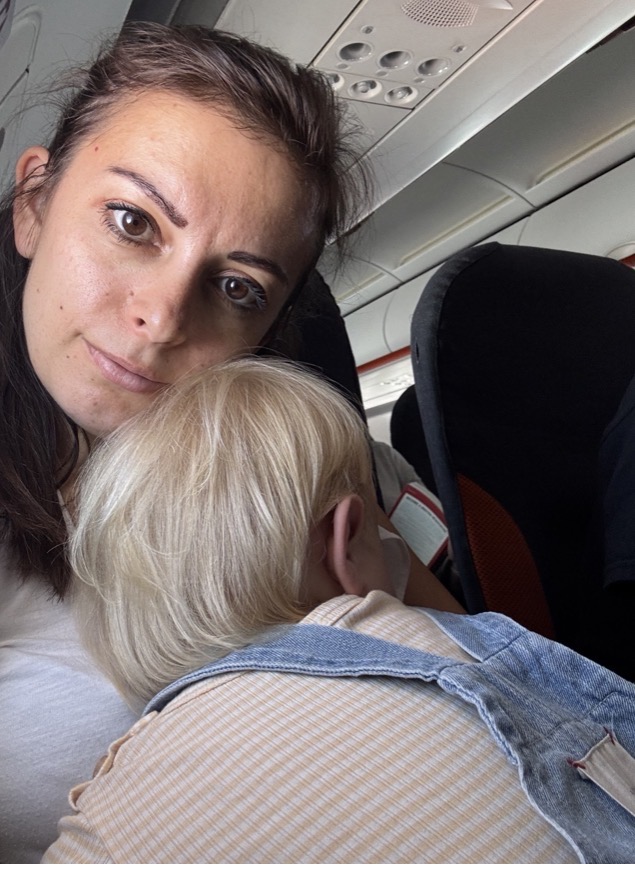
Overnight flights can actually work beautifully for some babies.
Once you’re cruising at altitude, cabin pressure is relatively stable compared with the changes during
climbing and descending.
At that point, the bigger influences on sleep are likely to be cabin lighting, noise, temperature, where your
baby is sleeping, their normal body clock, overtiredness, stimulation and how closely you can recreate
familiar sleep cues.
This is where I focus much more on sleep environment and routine than pressure.
If possible, change your baby into their sleepwear, offer their usual feed, use their familiar sleep sack
where permitted, keep stimulation low and recreate little pieces of bedtime from home.
It doesn’t have to be perfect. Babies don’t need their entire bedroom transported onto the aircraft.
Familiarity can come from a few small, predictable cues.
What If Your Baby Has a Cold?
Flying can sometimes feel more uncomfortable when the nose and upper airways are congested
because pressure may be more difficult to equalise.
If your baby is unwell, has significant congestion, appears to have ear pain or has recently had an ear
infection, it’s sensible to speak to an appropriate healthcare professional before flying if you’re
concerned.
This isn’t something I’d try to solve purely through changing their sleep schedule. Comfort and health
come first.
My Travel Sleep Nanny Approach
the plane.
Instead, I’m constantly asking: What does this child need next?
Are they hungry? Are they becoming overtired? Do they need movement? Are they overstimulated? Is
this a good opportunity for a nap? Are we approaching take-off or landing and could feeding help them
stay comfortable?
That flexibility is often far more valuable than trying to make an aeroplane nap happen at exactly 12:47
because that’s when the nap would normally happen at home.
The Takeaway
Cabin pressure doesn’t necessarily make babies sleepy.
What matters more is how the changes in pressure during take-off and landing affect their ears and
comfort.
Swallowing through breastfeeding, bottle-feeding, a dummy or an age-appropriate drink may help your
little one’s ears adjust. And if your baby sleeps peacefully through it? You don’t need to assume you must
wake them.
Once you’re cruising, shift your attention away from pressure and towards the things you can control:
comfort, familiar sleep cues, appropriate naps and keeping stimulation manageable.
Most importantly, don’t judge your baby’s travel sleep against a normal day at home. Flights are unusual
environments. Naps may be shorter. Bedtime may move. Your baby might sleep somewhere they
normally wouldn’t. And that’s okay.
Successful travel sleep isn’t about keeping the perfect schedule at 35,000 feet. It’s about helping your baby feel safe, comfortable and rested enough to enjoy the journey.
Planning a flight with your baby or toddler?
As The Travel Sleep Nanny, I help families prepare for naps, overnight flights, jet lag and sleep away
from home with gentle, realistic strategies designed around real family travel.
Hugs,
Alex,
The Travel Sleep Nanny
A Gentle Invitation
If you're preparing to travel and want a calm, personalized sleep plan, you don’t have to figure it out alone.
Explore support:
https://thetravelsleepnanny.co.uk/sleep-training
Tavi the Travelling Giraffe Goes on the Plane:
https://thetravelsleepnanny.co.uk/book